
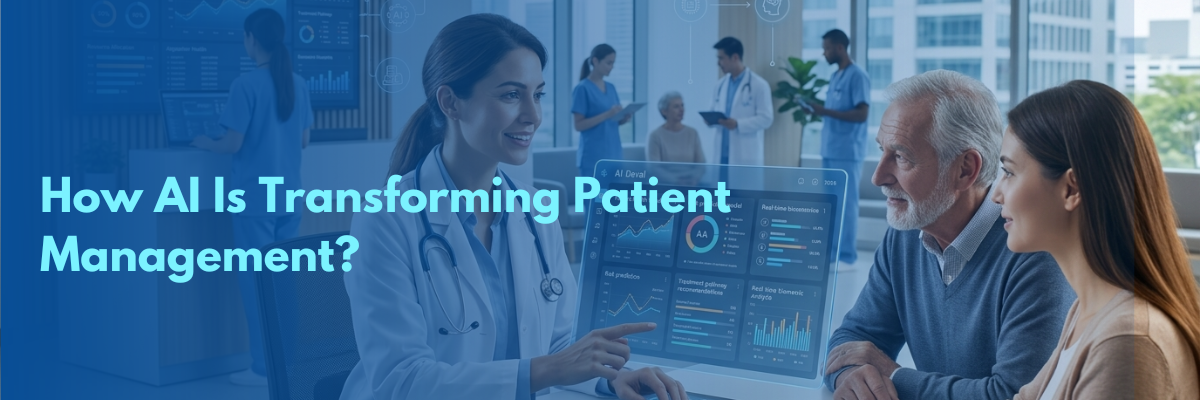
How AI Is Transforming Patient Management in 2026
Artificial intelligence is transforming patient management by helping clinics and hospitals automate time-consuming administrative tasks while improving the overall patient experience. In 2026, AI-powered patient management software can streamline appointment scheduling, reduce no-shows, automate follow-ups, assist with clinical documentation, and enhance patient communication. By integrating with EHRs and healthcare CRMs, these solutions improve operational efficiency, reduce staff workload, and support personalized care. The article also highlights the key features to look for in an AI platform, including HIPAA compliance, seamless integrations, scalability, and intelligent automation, enabling healthcare providers to deliver faster, more efficient, and patient-centered care.
The administrative burden on healthcare teams is immense. Front desk employees balance phone calls, memos from intake forms filled out by patients in the waiting area, checking insurance eligibility and reminding patients of appointments, often using three or four different tools that never talk to one another. At the same time, patients are used to the instant and personalized experience they receive from their banking app or food delivery service. That gap is being narrowed by AI, and in 2026 it has moved from "nice to have" to a core part of a clinic and hospital day-to-day patient management.
This change isn't replacing nurses and doctors with chatbots. The key is to get rid of repetitive, non-core work that adds little value so care teams can focus on patients and not forms. Here is a look at what has truly changed, the technology powering it, and how you can evaluate AI patient management tools.
What "AI Patient Management" Actually Means in 2026
AI Patient management is a software that leverages machine learning and automation to handle end-to-end processes moving from the first inquiry to post-treatment follow up. In practice, this usually includes:
-
Intelligent intake and lead routing: AI captures inquiries from a website, phone call or a campaign and automatically routes them to the right department or staff member based on urgency and specialty.
-
Predictive scheduling: Algorithms predict the likelihood of patients failing to show up for their appointments and then recommend the most appropriate timeslot, resulting in fewer gaps in the calendar.
-
Automated follow-ups: Patients get timely, customized reminders and check-ins without having a team member send each message.
-
Clinical documentation support: AI scribes and summarization tools draft notes from patient-provider discussions to minimize after-hours charting.
-
Patient communication assistants: AI role: Answering basic, repetitive questions (short wait times, billing information, what to do before an appointment) so staff can focus on complex cases.
The common thread is centralization. Instead of five disconnected systems each doing one small job, AI-powered platforms unify patient data and automate the connective tissue between them.
Why AI Patient Management Software Matters Now
A few converging trends have pushed AI patient management from experimental to essential:
Administrative burden has hit a breaking point. Multiple studies of front-desk teams and physicians estimate that nearly 50% of their working hours are spent on administrative rather than patient care activities. With patient volumes increasing, that ratio is simply not sustainable.
Patient expectations have shifted. Everyone has become accustomed to immediate responses, self-service scheduling and proactive notifications from just about every other service they consume. A clinic that requires three phone calls to book an appointment feels outdated by comparison, and patients increasingly choose providers based on convenience as much as clinical reputation.
Cross-border and remote care has expanded. Telemedicine and medical tourism increase the patients beyond local geography. Without automation, it is practically impossible to handle international patients, various time zones and languages as well as travel logistics manually.
The technology has matured. Early healthcare AI tools were specific and fragile. The platforms used today use a mix of natural language processing, predictive analytics and workflow automation with enough reliability for daily clinical operations, not just pilot programs.
Benefits of AI Patient Management Software
Reducing No-Shows and Filling Schedule Gaps
Unattended appointments cost practices actual income and interrupt persistent care. AI models trained on historical attendance data can predict the probability of a patient missing an appointment and trigger an extra reminder or offer a more convenient slot. Some platforms also auto-fill cancellations from a waitlist, turning no-shows into revenue without staff intervention by filling empty slots.
Personalizing Patient Outreach at Scale
Generic, one-size-fits-all messaging gets ignored. AI-driven segmentation lets practices send relevant messages, a post-op check-in, a chronic condition reminder, a seasonal screening nudge, to the right patient at the right time. This kind of personalization used to require a marketing team; now it's built into the CRM layer.
Cutting Documentation Time
AI writers who listen (or read tapes from) patient encounters and automatically produce structured clinical documentation are saving physicians hundreds of hours per week. Less charting outside of the clinic translates to less burnout and more time for actual patient care.
Smarter Lead and Inquiry Management
If a practice receives hundreds of inquiries from new patients every month, especially medical tourism providers and specialty clinics, an AI lead scoring system will determine which inquiries are most likely to convert based on intent and booking readiness with thoughtful routing that prioritizes high-value inquiry over others. It stops hot leads sitting in an inbox while staff manually triage everything.
Streamlining Cross-Border Patient Coordination
For providers of international patients, AI manages much of the organizational complexity automatically: multilingual communication, collection documents needed for treatment, scheduling between time zones and coordinating follow-up after the patient returns home. This converts what had been a manual, prone to-error process into an organized workflow.
What to Look for in an AI Patient Management Platform
Not all "AI-powered" healthcare software delivers equally. When evaluating a platform, a few criteria matter more than flashy feature lists:
-
HIPAA compliance and data security: Any platform that touches patient data should be compliant, these should not only be the claim on your homepage but also verifiable encryption standards or defined policies for how to handle the data you acquire.
-
Integration with existing systems: Choose AI tools that integrate seamlessly with your EHR, billing system, and scheduling tools instead of requiring a rip-and-replace migration.
-
Genuine automation, not just dashboards: Look for tools that actually execute tasks (sending reminders, routing leads, generating documentation) rather than simply visualizing data you still have to act on manually.
-
Usability for non-technical staff: The best AI tools are invisible. If your front desk team needs extensive training to use basic features, adoption will stall.
-
Scalability for cross-border or multi-location care: For international or multi-site care, ensure the platform supports multilingual capability and coordinated workflows across locations.
The Bottom Line
AI in patient management is no longer an ambitious far-away idea but the very real difference between a practice drowning in admin work and a stream-lined practice that runs like clockwork with staff members free to focus on patients. The platforms that are winning by 2026 combine AI automation with real usability and compliance, not just some bolt-on chat bot riding alongside a four decade old back-end system.
However, when it comes to choosing AI tools for your clinic or hospital, things are slightly more different. Curefy consolidates all the intelligent lead routing, automated follow-ups and HIPAA-compliant patient coordination into a single tool which has been architectured purely for healthcare and medical tourism agencies with teams managing the entire patient journey from first inquiry to post-treatment cares.
Frequently Asked Questions
Does AI replace front-desk and care coordination staff?
No. AI handles repetitive, rules-based tasks like reminders, intake routing, and basic Q&A, freeing staff to focus on complex patient needs, relationship building, and clinical judgment that AI cannot replace.
Is AI patient management software secure for sensitive health data?
Reputable platforms are built to be HIPAA-compliant, with encryption, access controls, and audit trails. Always verify a vendor's compliance certifications before adopting a tool, rather than assuming all "AI healthcare software" meets the same standard.
What's the difference between an EHR and an AI-powered healthcare CRM?
An EHR stores clinical records, diagnoses, and treatment history. A healthcare CRM, especially an AI-powered one, manages the relationship and communication side: lead intake, follow-ups, scheduling, and patient engagement. The two are complementary, and many modern platforms integrate both rather than requiring separate systems.
How quickly can a clinic see results after adopting AI patient management tools?
Many practices see measurable improvements, fewer no-shows, faster response times to inquiries, reduced admin hours, within the first few weeks, since automation targets immediate, repetitive bottlenecks rather than requiring a long implementation cycle.